

Environmental and ecological supervision
We provide environmental and ecological supervision during project implementation. We monitor compliance with administrative decisions, permits and environmental requirements, support contractors in implementing mitigation measures, and document the progress of works and identified environmental conditions.
What is environmental and ecological supervision?
Environmental and ecological supervision helps ensure that a project is implemented in accordance with the conditions set out in administrative decisions, environmental documentation and adopted mitigation measures.
In practice, it involves ongoing monitoring of how the works are carried out, identifying potential environmental risks and responding to situations that may only become apparent during project implementation.
Supervision may cover both ecological issues and other environmental aspects, such as waste management, protection of water and soil, emissions, noise, construction-site organisation and the way works are carried out near environmentally sensitive areas.
When is environmental supervision needed?
Environmental supervision may be required directly by the conditions of an environmental decision, other administrative decisions or permits, or may result from mitigation measures adopted by the investor.
It may be particularly important for projects implemented:
- near protected areas,
- in environmentally valuable locations,
- close to rivers, streams or other water bodies,
- in areas where protected species occur,
- in wetlands or forested areas,
- for extensive linear infrastructure projects,
- for developments that may generate significant emissions, noise or land disturbance.
Environmental supervision is also worth considering where site conditions may differ from the information available at the stage when the environmental documentation was prepared.
Scope of ecological supervision
The scope of ecological supervision depends on the nature of the project and local environmental conditions.
It may include, among other things:
- inspection of the site before specific works begin,
- identification of habitats and locations of protected species,
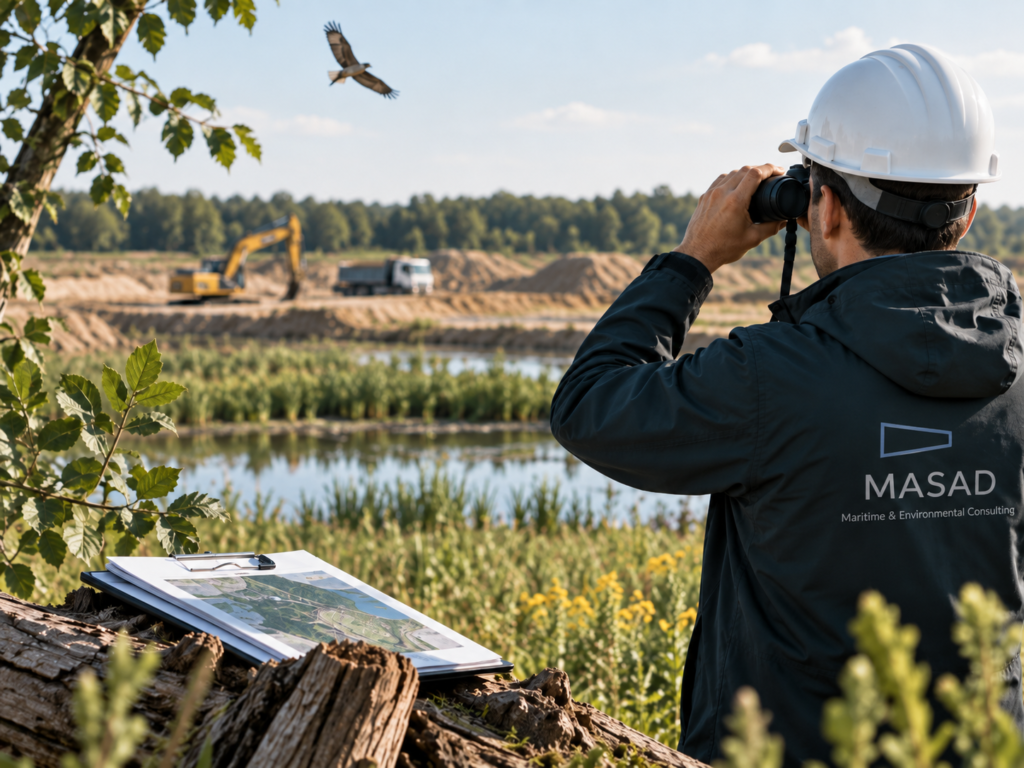
- monitoring the presence of birds, amphibians, reptiles, mammals and other relevant fauna,
- supervision of tree and shrub removal,
- monitoring works carried out during ecologically sensitive periods,
- checking excavations and other potential traps for animals,
- supervision of amphibian and reptile protection measures,
- monitoring works carried out near rivers, water bodies and wetlands,
- assessment of the effectiveness of mitigation measures,
- providing ongoing recommendations to contractors.
If an unforeseen environmental risk is identified, the supervisor may recommend changing the way the works are carried out, introducing additional safeguards or temporarily suspending specific activities until the situation has been properly assessed.
Supervision of mitigation measures
Mitigation measures are designed to reduce the adverse environmental impacts of a project.
They may relate, among other things, to:
- the timing of construction works,
- the organisation of the construction site,
- protection of habitats and protected species,
- protection of surface water and groundwater,
- reduction of noise and emissions,
- protection of trees and root systems,
- securing excavations,
- limiting disturbance to environmentally valuable areas,
- the way works are carried out near rivers, streams and wetlands.
The role of environmental supervision is to verify whether these measures are actually implemented and whether they remain effective under real site conditions.
Compliance with decisions and permits
One of the key tasks of environmental supervision is to verify that the works are carried out in accordance with the requirements applicable to the project.
We analyse, among other things:
- the environmental decision,
- conditions set out in other administrative decisions and permits,
- EIA report,
- Project Information Sheet (KIP),
- ecological documentation,
- agreements and opinions issued by competent authorities,
- adopted mitigation and monitoring measures.
This allows environmental requirements contained in administrative documentation to be translated into practical measures implemented on the construction site.
Documentation of supervision activities
Environmental supervision should be properly documented so that the investor has a clear record of how environmental obligations were fulfilled during project implementation.
The documentation may include:
- inspection reports and site notes,
- photographic documentation,
- a register of identified incidents and non-compliances,
- recommendations issued to contractors,
- information on corrective actions taken,
- records of completed inspections,
- periodic or final supervision reports.
The scope of reporting is tailored to the investor’s requirements, applicable administrative decisions and the nature of the project.
Cooperation with contractors and project management
Effective environmental supervision should form part of the day-to-day management of a project rather than being limited to periodic inspections.
We cooperate with the investor’s representatives, site managers, contractors and technical specialists. We explain environmental requirements, help interpret the conditions set out in administrative decisions and propose solutions that allow the works to be carried out in compliance with applicable requirements.
The aim is to identify potential problems as early as possible and reduce the risk of having to implement corrective measures at a later stage.
Responding to unforeseen environmental events
Not all environmental situations can be predicted at the design stage.
During project implementation, the following may be identified, for example:
- new locations of protected species,
- active bird nests,
- amphibian breeding sites,
- unexpected water conditions,
- spills of hazardous substances,
- improper waste storage,
- damage to trees or habitats,
- ineffective previously implemented safeguards.
In such cases, it is important to assess the situation quickly, identify appropriate measures and document how the issue was resolved.
Environmental supervision and the EIA report
The requirements for environmental supervision may result from analyses carried out as part of the Environmental Impact Assessment.
The EIA report may specify mitigation measures, requirements concerning the way construction works are carried out and the need to monitor particular environmental components.
Environmental supervision during project implementation makes it possible to verify whether the adopted measures are being properly implemented and whether any impacts arise that were not identified at the stage of preparing the environmental documentation.
More information: Environmental Impact Assessment – General Directorate for Environmental Protection
Environmental supervision and Natura 2000
Environmental supervision may be particularly important for projects implemented within or near Natura 2000 sites.
In such cases, it may be essential to comply with restrictions on the timing of works, protect specific habitats and species, control the extent of site disturbance and properly implement mitigation measures.
The scope of supervision should reflect the conservation objectives of the relevant Natura 2000 site and the potential impacts of the specific project.
How MASAD can support you
MASAD can provide comprehensive environmental support during project implementation.
The scope of our support may include:
- analysis of obligations resulting from administrative decisions and permits,
- preparation of an environmental supervision plan,
- ecological supervision on the construction site,
- ongoing environmental inspections,
- supervision of mitigation measures,
- photographic documentation and inspection records,
- preparation of recommendations for contractors,
- recording and analysis of non-compliances,
- support in responding to unforeseen environmental events,
- preparation of periodic and final reports,
- support for the investor in communication with the competent authorities.
support for the investor in communication with the competent authorities.
Frequently Asked Questions
Is environmental supervision always mandatory?
Not always. The requirement may result from an environmental decision, other administrative decisions or permits, or from the specific nature of the project. In some cases, investors choose to implement environmental supervision additionally in order to reduce the risk of non-compliance with environmental requirements.
What is the difference between environmental supervision and ecological supervision?
Ecological supervision focuses primarily on the protection of habitats, plants, animals and other elements of the natural environment. Environmental supervision may have a broader scope and can also cover waste, water, soil, emissions, noise and the organisation of construction-site facilities.
Does environmental supervision have to be carried out every day?
Not always. The frequency depends on the conditions set out in the relevant decisions, the nature of the project and the type of works being carried out. In some periods, regular inspections may be sufficient, while for particularly sensitive works the presence of a specialist may be required during the works themselves.
Can environmental supervision stop the works?
In practice, the procedure depends on the scope of authority and arrangements agreed with the investor, as well as on the conditions set out in the relevant decisions. Environmental supervision may identify a risk and recommend suspending or changing the way the works are carried out if this is necessary to protect the environment or ensure compliance with applicable requirements.
Do you prepare reports on the supervision carried out?
Yes. The reporting may include photographic documentation, descriptions of completed inspections, identified non-compliances, recommendations issued and information on how those recommendations were implemented.
Implementing a project that requires environmental supervision?
Contact us before construction begins or during the organisation of the construction site. We will review the conditions set out in the relevant decisions and environmental documentation, determine the required scope of supervision and propose an approach tailored to the project schedule.
Would you like to receive an initial quotation?
Complete the form — the questions will automatically adapt to the service you select.